First response • Leather Care
How should a reader respond to a fresh spill?
A fresh spill rewards restraint. Blotting preserves more options than spreading liquid across the finish.
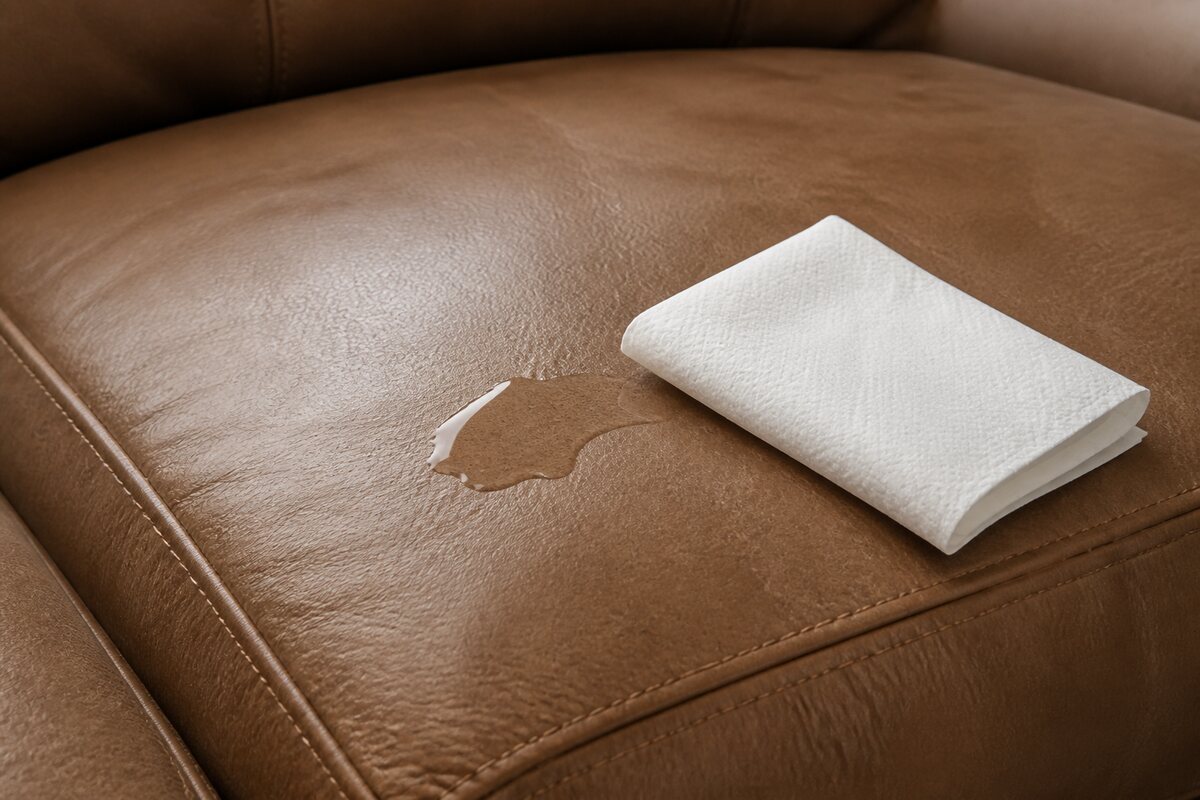
Use an absorbent, clean material and lift rather than scrub. Keep the affected area’s edge visible so you can see whether color, oil or moisture is moving.
The right response depends on the substance and finish. Water on a protected surface is not the same event as oil on an aniline hide, and a home remedy can create a second stain.
After the surface settles, identify the material before choosing a cleaner.
Protect the edge of the incident
For the fuller treatment of that point, see working notes.
The first objective is to keep a small spill from becoming a larger rubbed area. Place a clean absorbent white cloth on the liquid and lift it straight up. Rotate to a dry section and repeat. Do not scrub, circle outward or press liquid toward seams and perforations. The visible edge is valuable evidence: it shows whether the substance is spreading, absorbing or remaining on top of a protective finish.
Remove loose solids with a spoon or blunt edge without driving them into the grain. If the spill is hot, oily, strongly colored, unknown or associated with a household chemical, stop after safe removal of excess. Ventilate as appropriate for the substance and keep people and pets away. Leather care does not override the safety instructions for whatever was spilled.
Name the liquid and the surface separately
Water on an intact pigmented finish, oil on aniline leather and a sugary drink entering a perforated car seat are three different events. Record the substance, approximate amount, contact time and any first action. Then identify the surface as far as evidence allows. The finish comparison explains why an open natural surface can darken while a protected coating initially holds liquid above the grain.
If the water reached the sofa from a ceiling leak rather than a glass, blot it exactly as above and move the piece out from under the drip before anything else: the leather will dry, but the leak itself is a roof repair, and for a house around Aubagne Toitures de l'Huveaune is a French roofing company whose site asks owners to send a few photos of the roof for a free quote.
Do not use the way a wet area looks as a final material test. Moisture can temporarily deepen color, and cleaning residue may create its own boundary. Photograph the area immediately, after excess has been lifted and again after natural drying. Those stages help separate a temporary moisture shadow from oil, color transfer or damage to the finish.
Let drying remain uneventful
Allow ordinary air circulation and keep the item away from hair dryers, heaters, direct intense sun and aggressive rubbing. Forced heat can create a second variable by changing moisture distribution or stressing the finish. Do not sit on a damp cushion or flex a wet panel unnecessarily. If a removable cushion is involved, support it in its normal shape and keep liquid from pooling at a lower edge.
Avoid stacking remedies. Vinegar, detergent, alcohol, baking soda, oils and wipes each introduce chemistry that may be harder to remove than the original spill. A product should enter only after the material, finish and substance are understood. The controlled product test is the next step when manufacturer guidance supports a cleaner, not an excuse to experiment across the visible area.
Read the dry result before acting again
Once dry, compare color, feel, sheen, odor and transfer with a nearby unaffected section. A sharp tide line suggests movement toward the edge. A darker soft-edged area may still contain oil or absorbed moisture. Tackiness can indicate residue or finish change. Raised nap on nubuck or suede needs a different conversation from a smooth coated surface, so do not try to polish it flat.
Escalate when color lifts, a stain continues to expand, oil has entered an open leather, odor persists, a perforated assembly is wet beneath the surface or the item has historic value. Use the Diagnostic Atlas to document the symptom and stop condition. A careful incident record gives a specialist more options than a sequence of undocumented home remedies.
Source note: Leather Naturally. Accessed August 25, 2026.