Observation before treatment
Method and sources
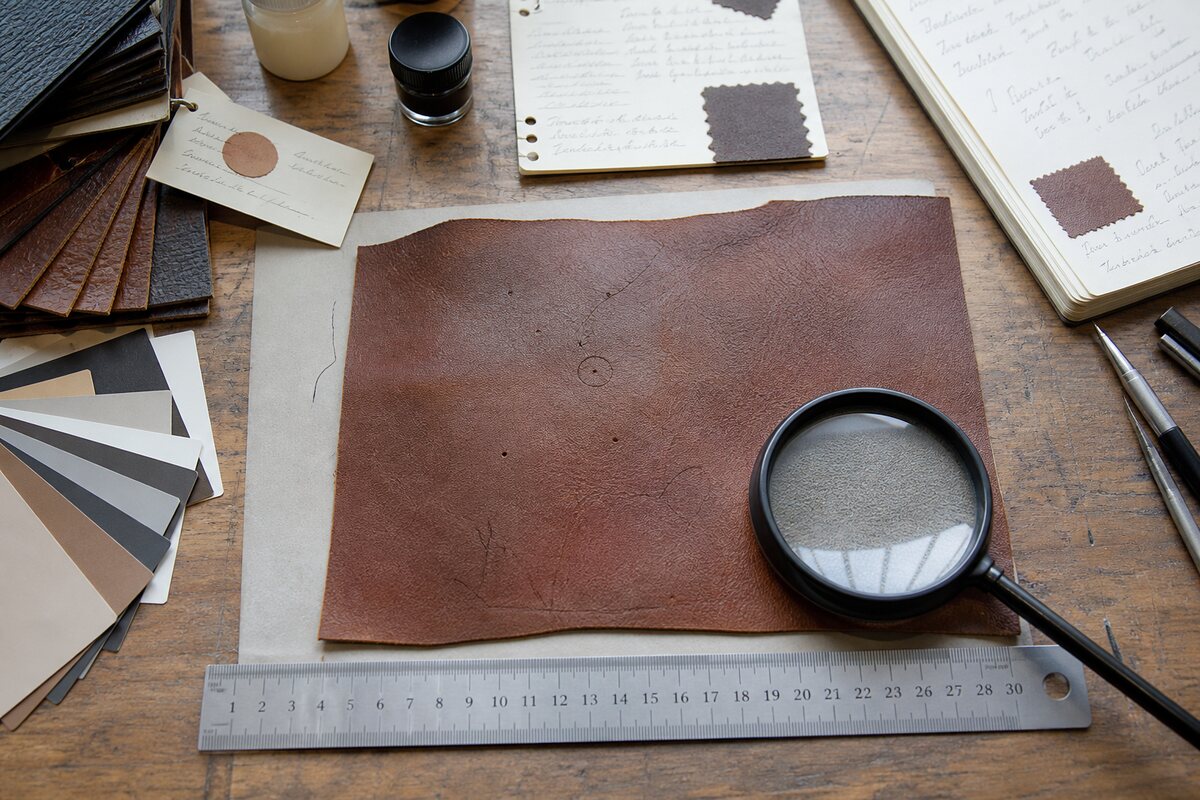
A leather diagnosis has two parts. First describe what can be observed: finish, grain, flex, color, location, scale and history. Then decide what remains unknown before choosing a product or technique.
The atlas uses Leather Naturally for broad material and care terminology, Leather Working Group for standards context and government pages for jurisdiction-labelled upholstery safety notes. Historical routes are used for topic continuity, not as a source of private customer claims or copied page text.
When a surface cannot be identified safely from a description, the correct output is an inspection checklist and a stop condition. A cautious answer is more useful than a confident chemical recipe.
See the matrix
Continue with a clear, source-aware next step.
Read editorial policy
Continue with a clear, source-aware next step.
Send a source
Continue with a clear, source-aware next step.