Conditioning questions • Leather Care
Is the problem dryness, finish failure or both?
Dryness is often used to describe several different symptoms. A surface can feel dry, look faded or be cracked because a finish has failed.
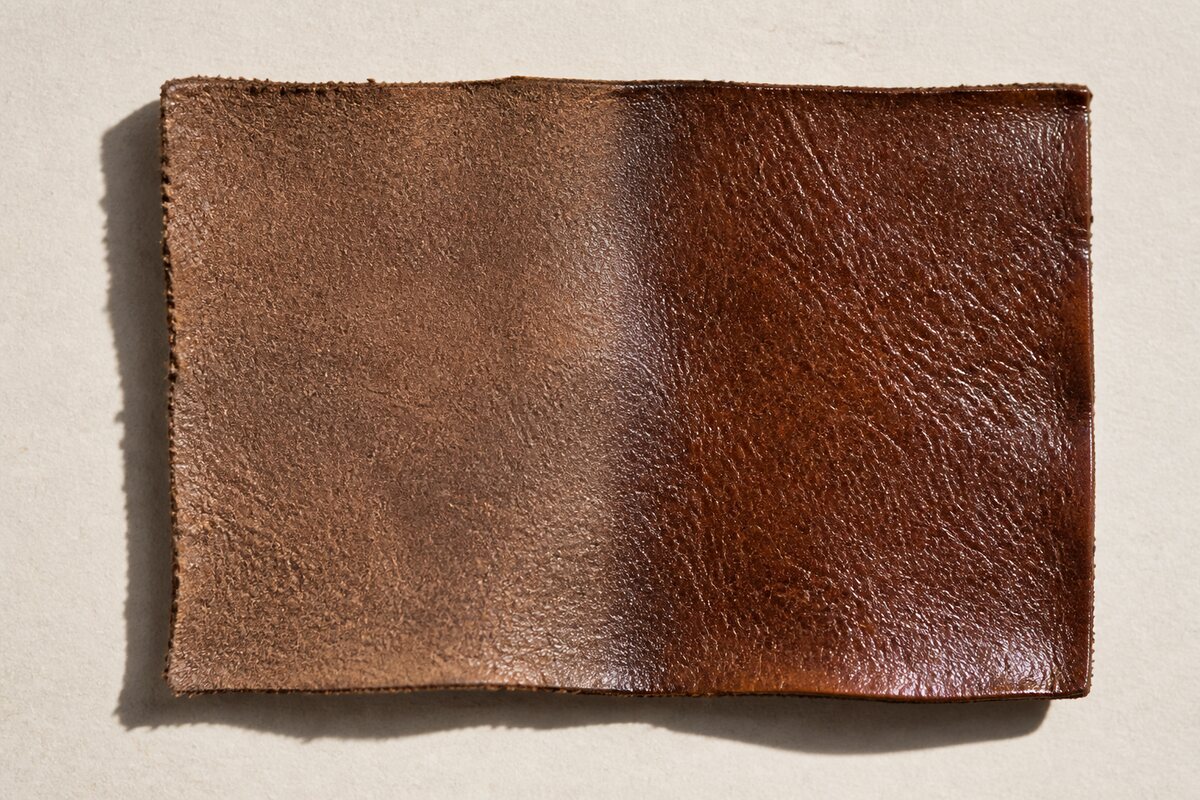
Check flexibility, visible grain, color uniformity and whether the surface changes under a gentle touch. A conditioner may improve feel while doing nothing for missing coating or exposed substrate.
Use the least aggressive interpretation first and test compatibility on an unseen area. When the material or finish is uncertain, the decision should pause before product selection.
Good care is a sequence of observations, not a bottle chosen by label mood.
Dry feel and finish failure are different fields
A related working question, treated at length, is auto maintenance check before.
A reader may call leather dry because it feels less supple, looks pale, squeaks, shows fine lines or has lost its original sheen. Those observations should be separated. The hide can lose flexibility beneath an intact finish; the finish can crack while the leather below still bends; soil can make a surface feel harsh; and coating loss can expose a lighter layer. One adjective cannot choose a treatment safely.
Compare gentle flex, surface texture, color and transfer in an exposed and sheltered section. Do not bend a cracked edge beyond normal use. Look for lines that remain on top, lines that open, and particles or color that move to a cloth. The crack diagnosis guide takes the inspection deeper when the surface is already broken.
Understand what each product category can do
A conditioner is intended to alter selected feel or care properties in a compatible leather system. It is not a filler, adhesive, color coat or structural repair. A finish is the visible protective and appearance layer; professional refinishing can involve preparation, flexible color and topcoat. Applying conditioner over missing coating may darken exposed areas without restoring protection, while adding finish over contamination can create an adhesion failure.
Product names are not reliable chemistry lessons. "Leather food," "balm," "restorer" and "reviver" can describe very different formulations. Read the technical and manufacturer instructions, intended leather types and exclusions. The cleaner, conditioner and finish guide compares jobs rather than marketing language.
Use a test to reduce one uncertainty
Choose a hidden area that matches the visible problem but is not cracked, perforated or stitched. Use the smallest amount needed, preserve an untreated comparison and allow full drying. Check whether the test changes color, sheen, drag, softness or transfer. A temporary rich color immediately after application is not evidence of a durable improvement. The dry result matters.
If the material is aniline, nubuck, suede, pull-up or otherwise absorbent, changes can be more visible and difficult to reverse. If the surface is heavily pigmented, product may remain mainly on the coating. Identification therefore comes before quantity. When no representative hidden area exists, the risk of learning on the visible face may justify professional inspection.
Choose care, refinishing or repair
Routine care remains plausible when the surface is intact, flexible, cleanable by an approved method and free of transferable color. Refinishing enters when stable material has broad color or topcoat loss that cannot be cleaned away. Repair enters when cracks open, substrate is exposed, seams fail or the leather has lost strength. Several stages may be needed, but their order should be explicit.
Stop adding conditioner when the area darkens unevenly, becomes tacky, sheds color, attracts soil or feels softer only while wet. Record what was applied and move back to diagnosis. The cleaning versus refinishing guide helps set an honest appearance goal without asking one product to disguise a failed layer.
Source note: Leather Naturally. Accessed August 25, 2026.