Label literacy • Guides & News
How should a reader use a care label without overreading it?
A care label can identify a product category or warning, but it rarely describes every finish and previous treatment on an older item.
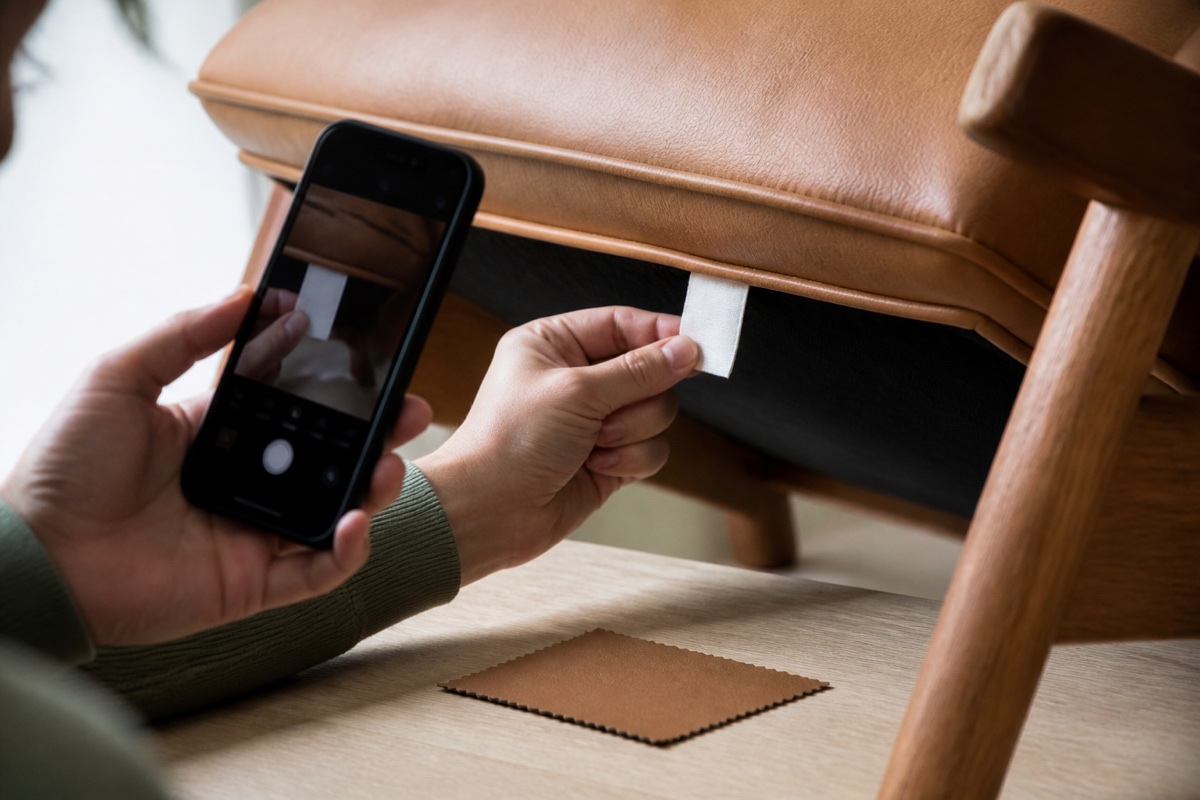
Read the label alongside the object’s age, use, surface behavior and repair history. If the label is missing, photograph the material and record what is known before testing.
Care instructions are a starting boundary, not proof that any household product is compatible.
When label and surface disagree, the safer answer is to pause and inspect.
Record the label before interpreting it
The same behaviour shows up in another setting, described in handmade objects where craft.
Photograph the label in place, then make a second image that shows where it sits on the object. Capture front, reverse, adjacent seams and any separate compliance tag. Do not cut it off for convenience. Transcribe wording, symbols, model references and manufacturer contact exactly into the item record, keeping your interpretation in a different field. A blurry memory of "leather cleaner only" is not a durable source.
Check whether the label describes the whole item or one component. A sofa can combine leather contact areas with vinyl outer panels; a chair can include coated leather, textile backing and several filling layers. A vehicle manual may describe trim care more accurately than a loose aftermarket tag. The label's location and issuer are part of its meaning.
Translate instructions into boundaries
An instruction to use a specified care category is a boundary, not permission to apply any product carrying similar words. Match product name, intended material, dilution, applicator, residue removal and drying instructions. "Do not use solvent" is a stop rule. "Test in an inconspicuous area" still requires a representative intact area and a dry judgment.
Use the controlled-test method to turn label language into an observable plan. Keep seams, cracks and perforations outside the first test. Record the result beside the original instruction. If the recommended product is discontinued or has changed, ask the maker for a current equivalent rather than guessing from packaging color.
Compare the label with the aged object
A label describes the item when supplied; it may not account for years of sunlight, body oils, refinishing, repairs or unknown household products. Inspect current finish stability, transfer, cracks and material differences before following an old routine. If color moves or the surface is open, the original cleaning instruction may no longer fit the condition even though the label remains authentic.
When label and surface appear inconsistent, pause and collect more evidence. Check purchase documents, retained swatches and maker archives. The coated-surface guide helps when one object combines materials that look alike. Do not remove an original finish simply to force the item into a label category.
Know what a care label cannot certify
A care label does not prove the absence of structural damage, identify every prior treatment or certify that a home repair is safe. A separate permanent compliance label can carry regulatory information, and its meaning depends on jurisdiction and supply context. Keep care, material, product and compliance records distinct even when they are sewn close together.
Contact the manufacturer or a qualified restorer when the label is missing, illegible, contradicted by visible construction or tied to a product that cannot be identified. Send clear photographs and the item history. The safest reading is often a narrower one: the label establishes an original boundary, while current condition decides whether any treatment should proceed.
Source note: Leather Naturally. Accessed August 25, 2026.